




HIST 3270 Final Project
For my final project, I will be exploring how mass enslavement shaped the daily lives of enslaved individuals and the world. Specifically, I would like to focus on how some aspects of slavery negatively impacted enslaved people and the world around them. This project features the National Underground Railroad Freedom Center in Cincinnati, Ohio. I have chosen to do a journalistic writing on my personal portfolio page. I chose this format and medium because as a journalism major, I feel that creating a journalistic work best exemplifies what I have learned in this course in a creative way. Additionally, this project will appear on my portfolio for others to view as well.
From Slavery to Freedom Exhibit
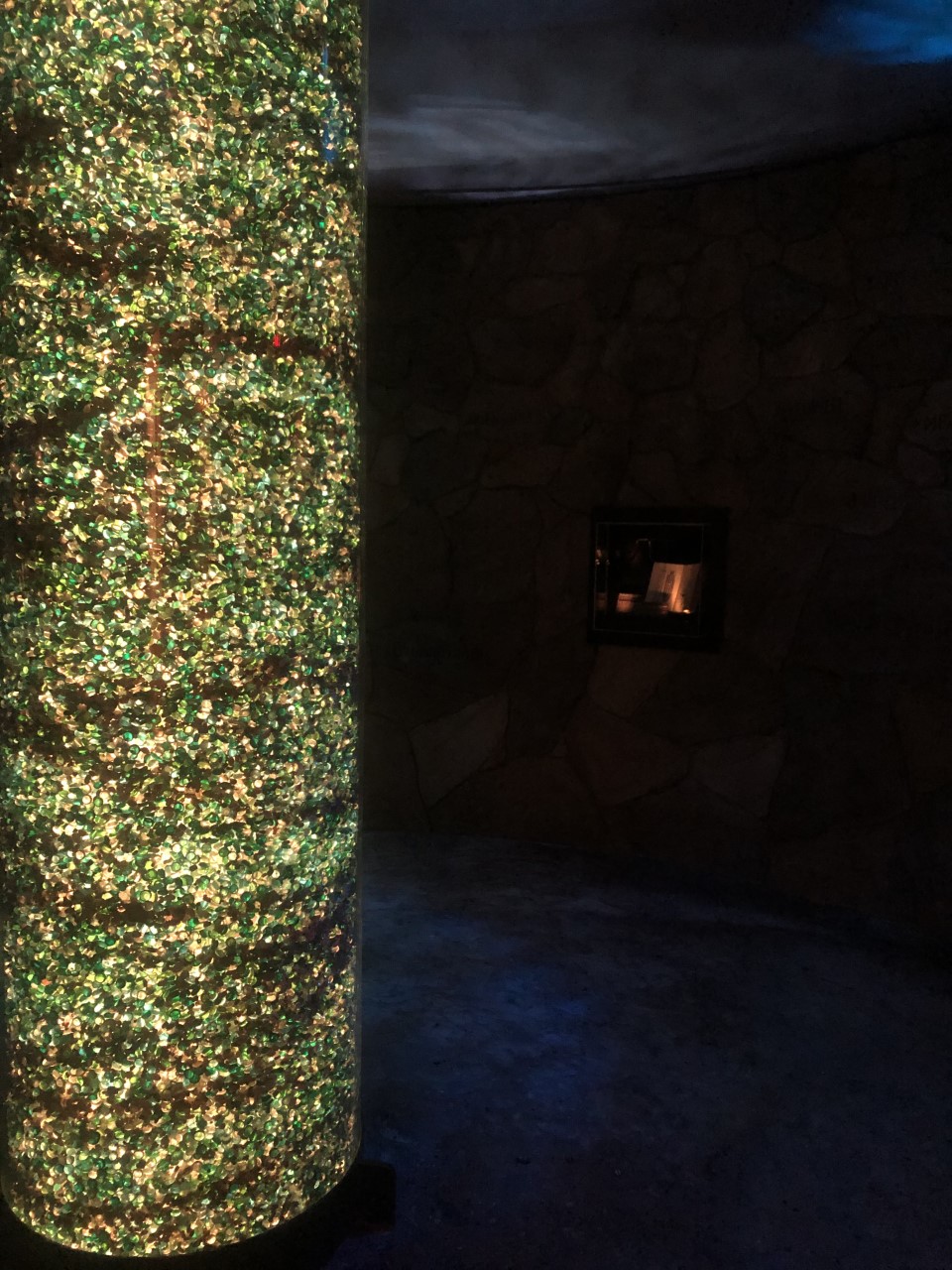
First, I would like to draw attention to the From Slavery to Freedom exhibit at the National Underground Railroad Freedom Center. This permanent exhibit explains the basic history of slavery. The portion of the exhibit that particularly stood out to me was the second area I walked into. This space was called "commemoration." This area honored African individuals who died during the Middle Passage.
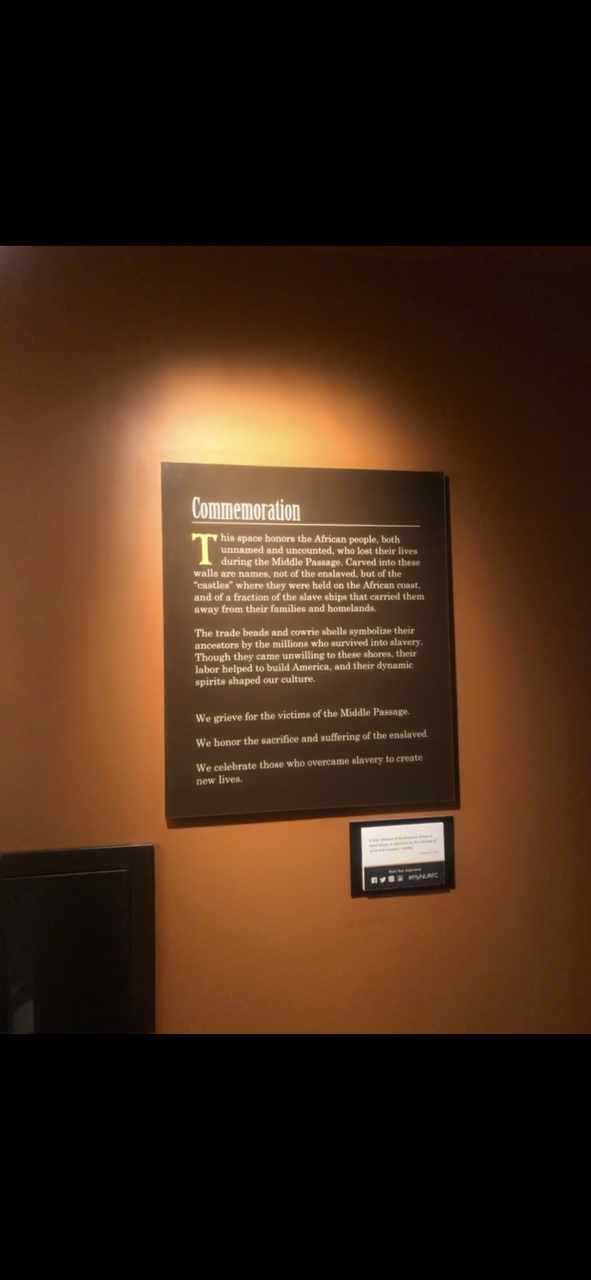
This commemoration space honestly made me feel emotional. I think it can be easy to read about the history of slavery, but separate oneself from it emotionally. This space made me feel many different emotions, but I mostly felt sad. It is heartbreaking that so many innocent lives were lost due to slavery.
Clearly, the countless deaths of enslaved people is one negative impact on slavery. But, many more can be seen when studying the history of slavery. In Excerpts from the French Code Noir, the law code that regulated the practice of slavery in the French American colonies, it is evident that laws impacted the everyday lives of the enslaved. For example, law 12 discussed which master children belonged to if the parents were both slaves and married, while law 13 explained if children were to be free or enslaved depending on the status of their parents (Excerpts from the French Code Noir, the law code that regulated the practice of slavery in the French American colonies, 32). These laws indicate that enslaved people did not have control over their own personal life, including full control over decisions regarding their children. Who children belonged to and their freedom was all decided by those in power, clearly impacting the personal lives of enslaved people daily. Limitations on the familial lives of enslaved individuals is also seen in Colonial Lives: Documents in Latin American History. There were intense processes needed to approve marriages for enslaved people, including petitions, witnesses, repeated opportunities for individuals to reject the marriage, and more (Richard Boyer and Geoffrey Spurling, Colonial Lives: Documents in Latin American History, 1550-1850 (New York: Oxford University Press, 2000, 237). Mass enslavement created barriers for enslaved people, impacting enslaved individuals and their families negatively. Through documentation, we know that their personal lives were not excluded from those hardships.
One way slavery impacted the world during the time of mass enslavement is that, according to law 30 in Excerpts from the French Code Noir, the law code that regulated the practice of slavery in the French American colonies, slaves were not allowed to hold public offices (Excerpts from the French Code Noir, the law code that regulated the practice of slavery in the French American colonies, 34). Putting limits on what an enslaved person could do not only impacted the daily life of enslaved people, but it also negatively impacted the world around them. I wonder how many ideas, thoughts and opinions of enslaved people were never heard, and the world was never positively impacted by, due to the limitations mentioned above.
One specific way that slavery negatively impacted the daily lives of enslaved individuals is through the treatment and limitations on enslaved women. As seen in Caetana Says No, women like Caetana were constrained by slavery and patriarchy. In the text, the final decision is in part to deny the annulment as a result of this gender-race prejudice and the thought that Black women were promiscuous (Sandra Lauderdale-Graham, Caetana Says No: Women's Stories from a Brazilian Slave Society, New York: Cambridge University Press, 2002, 68). Slavery played a role in this gender-race prejudice, limiting equality and fairness for this group of individuals. Poor treatment towards women of color was also seen in The History of Mary Prince, A West Indian Slave, Related by Herself, which features the story of Mary Prince. She describes the indecencies of her slave owner, and how they made her feel shameful (Mary Prince, The History of Mary Prince, A West Indian Slave, Related by Herself, London, 1833). This type of behavior was more common than one may expect towards enslaved women, leaving behind the negative stereotype mentioned above in addition to the trauma left on enslaved women.
One way that slavery impacted the daily life of all Black individuals was seen in Beyond Freedom's Reach, with the constant threat of re-enslavement being a possibility (Adam Rothman, Beyond Freedom's Reach, Cambridge, MA: Harvard University Press, 2015). Although some enslaved individuals became free, they still had to carry the weight of possibly being re-enslaved. This would be a significant negative impact on those who were no longer enslaved, as they feared that their life could be changed any day, at any time, with no warning.
The history of slavery not only impacted those who were alive during the time of enslavement, but, those who live after slavery as well. An example of this is seen in Freedom Papers, when Edouard Tinchant referred to himself as a "son of Africa" (Rebecca Scott and Jean Hébrard, Freedom Papers: An Atlantic Odissey in the
Age of Emancipation, Cambridge, MA: Harvard University Press, 2012, 6). Although slavery was abolished in the United States when Edouard made this reference to himself in 1899, the usage of "son of Africa" still carried a connection to his ancestors and slavery. When thinking especially of the year 1899, I do not think this would have a positive connotation. Referencing to himself in this way would lead one to think about his ancestors and slavery, which would likely include experiencing poor conditions and treatment. It should be clear that the enslaved people are not negative. The conditions the enslaved people endured are the negative impact here, as those conditions and situations were likely not fair or good.
One reading that connects to this exhibit, almost in an opposite light, is The Two Princes of Calabar. This exhibit at the museum is called From Slavery to Freedom, while the Robin Johns experienced freedom to slavery (Randy J. Sparks, The Two Princes of Calabar: An Eighteenth-Century Atlantic Odyssey, Cambridge, MA: Harvard University Press, 2004). This novel provides an alternative look into the impacts of slavery, shifting from being on the other side of enslavement to actually experiencing enslavement. This is a unique example of how mass enslavement impacted not only enslaved people, but the rest of the world as well. Although The Robin Johns were once slave traders, even they were not exempt from slavery.
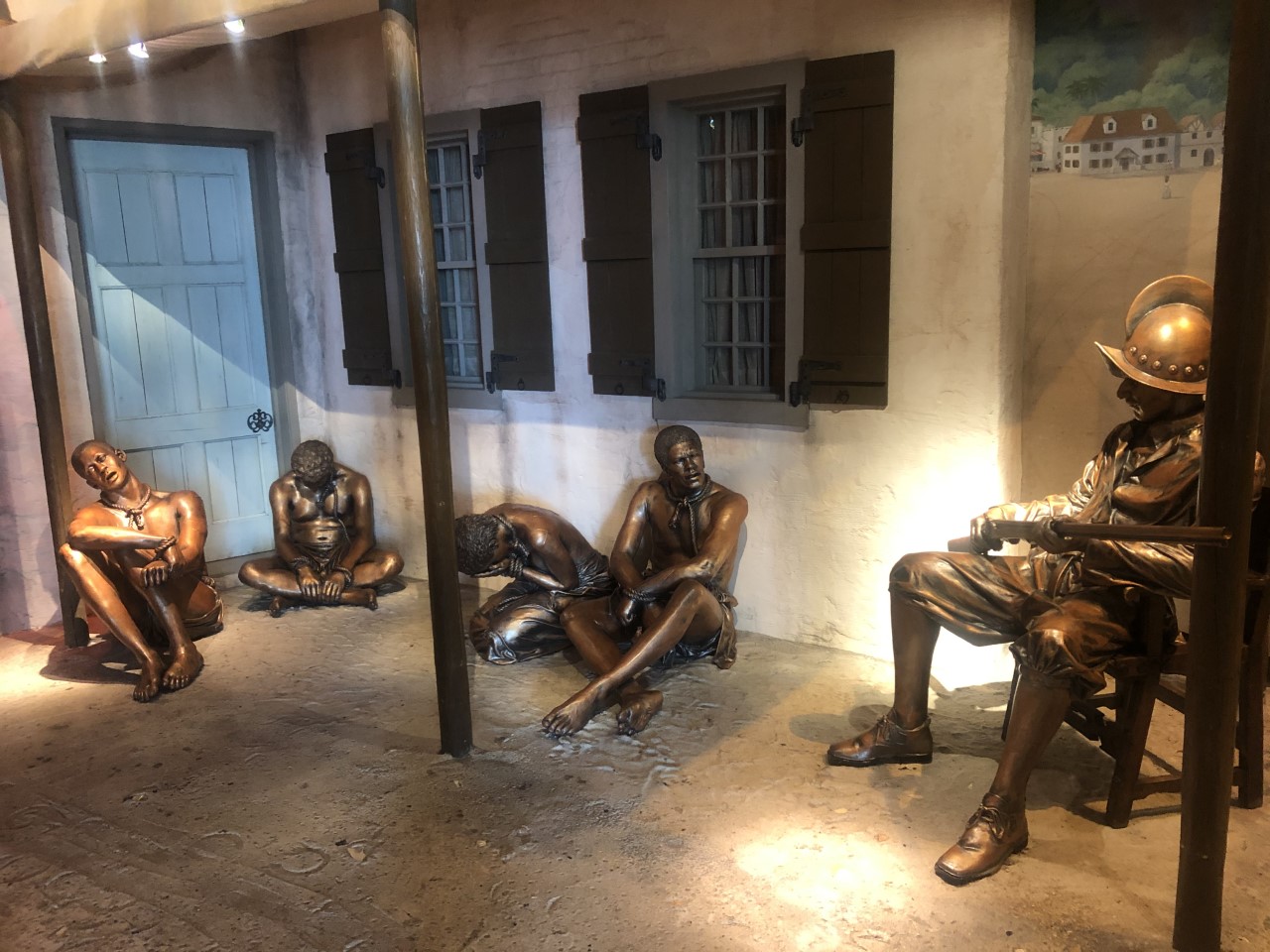
This specific exhibit made me think about all of the topics above, and really brought the things I have learned this semester full circle. The picture below, which is from the exhibit, provides a visual aspect to the points made above. Although it does not represent every specific situation described, the image depicts to me the negative impacts of slavery. The expressions and body language displayed along with the poor conditions are a visual representation of the limits placed on enslaved people and the horrific treatment they endured.
The Slave Pen
According to the National Underground Railroad Freedom Center, "The Slave Pen," built in the early 1800's, was recovered from a fam in Mason County, Kentucky (The National Underground Railroad Freedom Center, 2020). This pen was used by Captain John W. Anderson, a Kentucky slave trader, who used the structure as a holding pen as a way to temporarily keep enslaved people from being moved south and sold. The New York times, which did a feature on this specific pen, has identified this as the only known surviving rural slave jail (Patricia Leigh Brown, "In a Barn, a Piece of Slavery's Hidden Past," 2003).
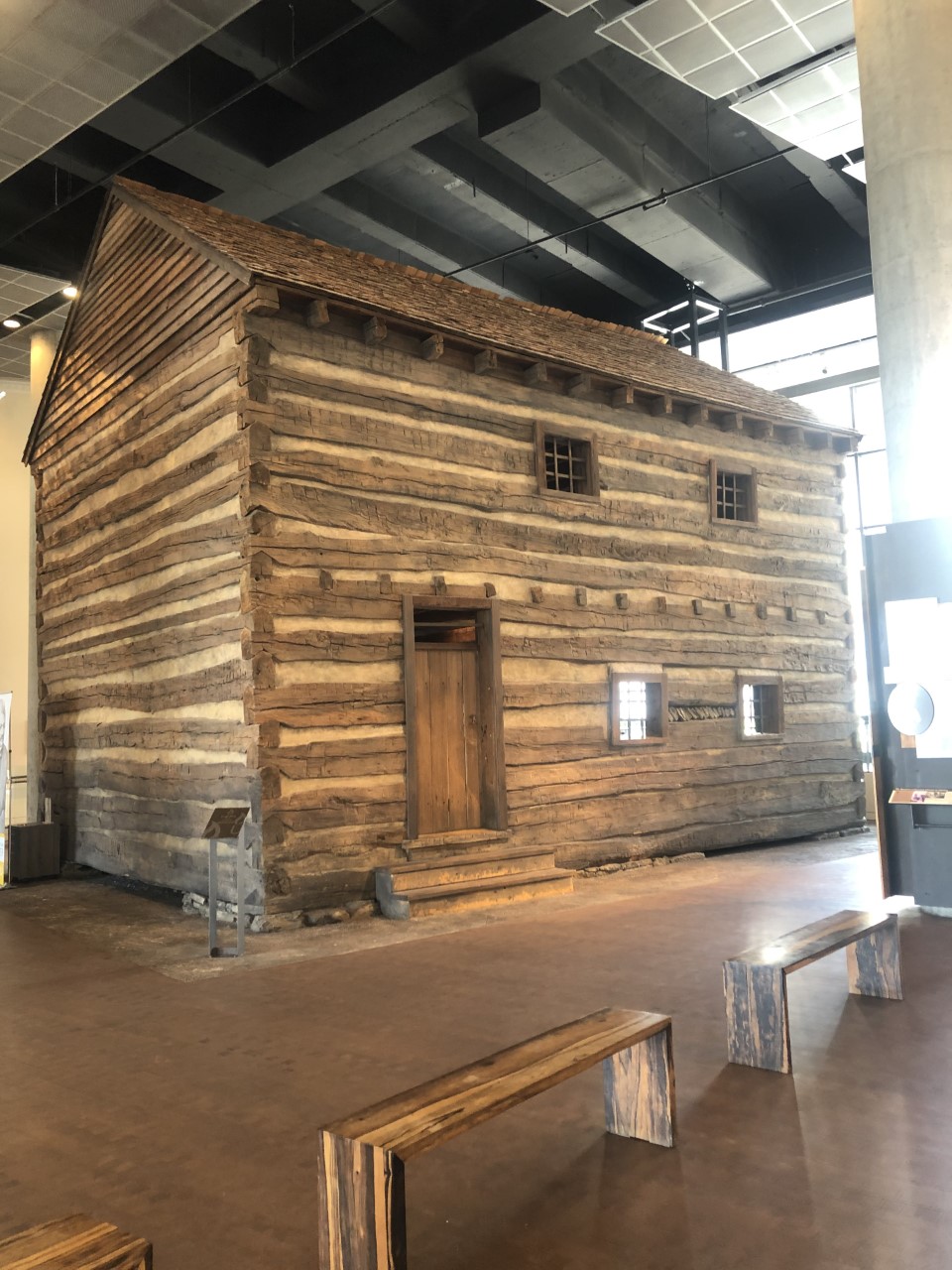
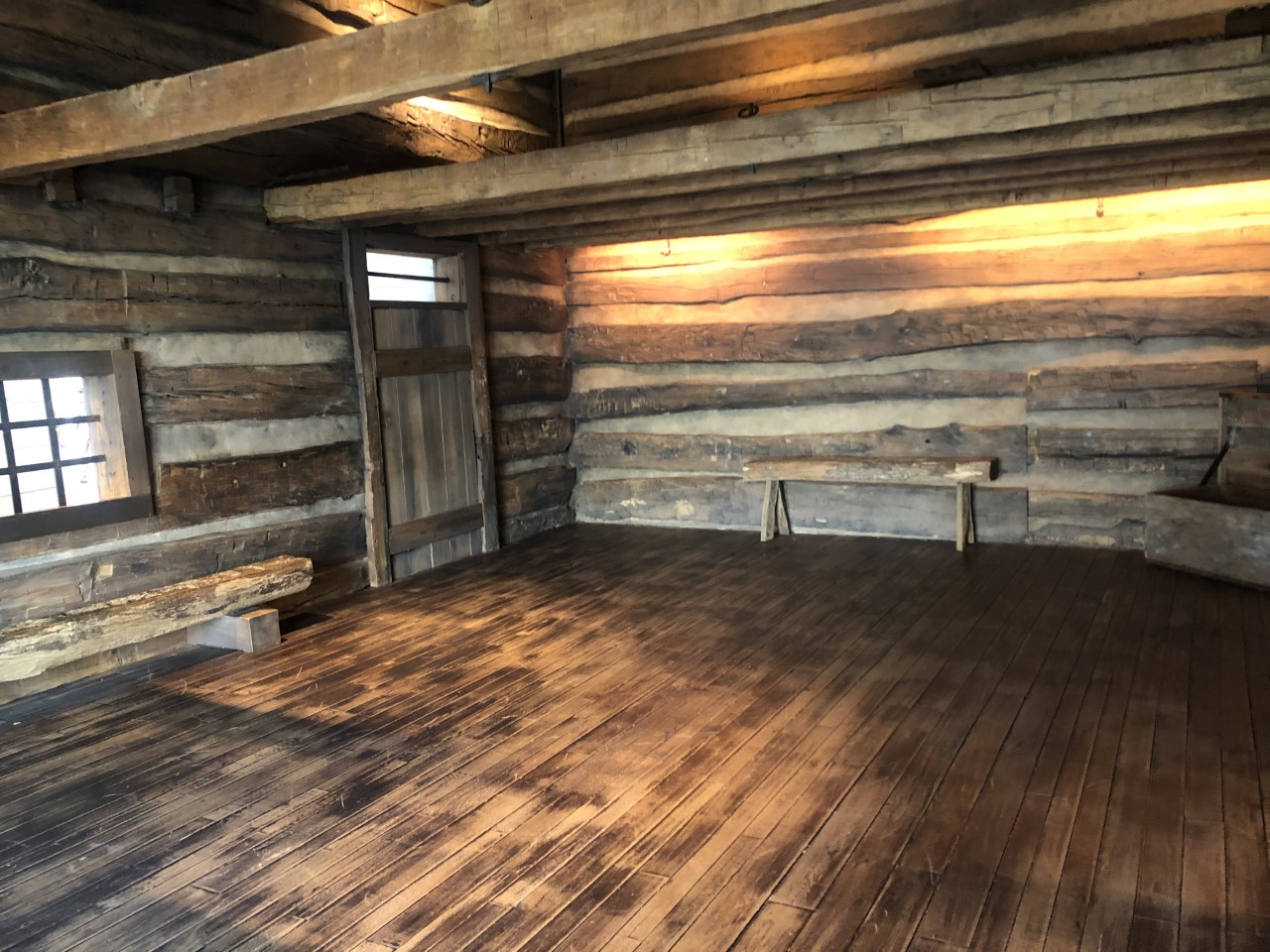
This structure symbolized to me the many unpleasant, harmful situations enslaved people were put in. This reminded me of Equiano and his description of the horrific conditions of the slave ship he was on ("The Interesting Narrative of the Life of Olaudah Equiano," Unchained Voices: An Anthology of Black Authors in the English-Speaking World of the Eighteenth Century, Vincent Carretta, ed., Lexington: University of Kentucky Press, 1996). Not only were horrific conditions experienced by enslaved individuals, but these traumatic situations stuck with enslaved individuals for the rest of their lives. As these conditions were used and accepted by slave traders and owners, they were seen as the norm. Obviously these experiences impacted enslaved people more heavily, but, the impact of these experiences impacted the world as a whole by establishing poor treatment of enslaved people as acceptable in society.
In Conclusion
All in all, the history of slavery left an impact on the enslaved and the world around them during and after enslavement. Sadly, slavery left many negative impacts on enslaved individuals and families in addition to the world as a whole. These impacts cannot and should not be ignored. The impacts of the history of slavery are so significant that there are museums such as the National Underground Railroad Freedom Center that provide education on and remember the history of slavery. I have learned a lot in this course, and would even say that I have never learned more in a course than this one. I think it is important that the history of slavery is acknowledged, learned from and not forgotten as we work towards a more equitable, fair and just world today.
Bibliography
Boyer, Richard and Geoffrey Spurling. Colonial Lives: Documents in Latin American History, 1550-1850. New York: Oxford University Press, 2000, 236-248.
Brown, Patricia Leigh. "In a Barn, a Piece of Slavery's Hidden Past," (2003): https://www.nytimes.com/2003/0...
Excerpts from the French Code Noir, the law code that regulated the practice of slavery in the French American colonies.
Lauderdale-Graham, Sandra. Caetana Says No: Women's Stories from a Brazilian Slave Society. New York: Cambridge University Press, 2002, 49-79.
Prince, Mary. The History of Mary Prince, A West Indian Slave, Related by Herself (London, 1833).
Rothman, Adam. Beyond Freedom's Reach. Cambridge, MA: Harvard University Press, 2015.
Scott, Rebecca and Jean Hébrard. Freedom Papers: An Atlantic Odissey in the Age
of Emancipation. Cambridge, MA: Harvard University Press, 2012.
Sparks, Randy J. The Two Princes of Calabar: An Eighteenth-Century Atlantic
Odyssey. Cambridge, MA: Harvard University Press, 2004.
"The Interesting Narrative of the Life of Olaudah Equiano," in Unchained Voices: An Anthology of Black Authors in the English-Speaking World of the Eighteenth Century, Vincent Carretta, ed. Lexington: University of Kentucky Press, 1996, 197-207.
